For gym owners and home fitness enthusiasts in New Jersey, there’s nothing more frustrating than a piece of equipment that suddenly stops working. Often, the culprit is an electrical issue. These problems not only cause downtime and disrupt workouts but can also pose significant safety risks if left unaddressed. Understanding the common electrical faults in your fitness machines is the first step toward preventing costly and inconvenient breakdowns.
This guide will walk you through the most frequent electrical problems found in treadmills, ellipticals, exercise bikes, and strength machines. We’ll cover the warning signs to look for, practical prevention tips, and when it’s time to call in a professional for gym equipment repair.
Why Electrical Health is Critical for Gym Equipment
Modern fitness equipment is a sophisticated blend of mechanical and electrical components. The electronic systems control everything from the console display and workout programs to the motor speed and resistance levels. Even a minor electrical glitch can render an expensive machine useless. Power surges, worn-out wiring, and internal component failure are common issues that can lead to sudden breakdowns. By prioritizing electrical maintenance, you protect your investment, ensure user safety, and provide a reliable fitness experience.
Common Electrical Issues in Cardio Machines
Treadmills, ellipticals, and stationary bikes are the workhorses of any gym. Their heavy and continuous use makes them particularly susceptible to electrical wear and tear.
Power Failure and Tripped Breakers
One of the most common complaints is a machine that won’t turn on at all or that shuts off unexpectedly during use.
- The Cause: This issue is often related to the power source. It could be as simple as a loose plug or a tripped circuit breaker in your facility or home. It can also indicate a more serious problem, such as a faulty power cord, a damaged internal power supply, or a short circuit within the machine itself. An overloaded circuit, with too many machines drawing power from a single breaker, is a frequent cause in both commercial and home gym settings.
- Warning Signs:
- The machine is completely dead with no lights on the console.
- The equipment shuts down abruptly in the middle of a workout.
- You frequently have to reset the circuit breaker for the outlet the machine is plugged into.
- Prevention Tips:
- Ensure each major piece of cardio equipment is on a dedicated circuit, especially in a commercial setting.
- Regularly inspect power cords for signs of fraying, pinching, or damage.
- Avoid using extension cords, as they can cause a voltage drop and are not designed for the high power draw of commercial-grade equipment. If you must use one, ensure it’s a heavy-duty, appropriately rated cord.
- Plug equipment into surge protectors designed to handle the load of fitness machines.
Malfunctioning Consoles and Displays
The console is your machine’s command center. When it fails, the entire unit becomes difficult or impossible to operate.
- The Cause: Console issues can stem from a variety of sources. A loose connection between the console and the main control board is a frequent culprit. Power fluctuations can also damage sensitive electronic components within the display. In other cases, the console’s internal hardware may have simply reached the end of its lifespan.
- Warning Signs:
- A flickering or blank display screen.
- Buttons are unresponsive or work intermittently.
- Error codes appear on the screen.
- Heart rate sensors fail to provide a reading.
- Prevention Tips:
- Gently wipe down consoles with an approved electronics cleaner; avoid spraying liquid directly onto the console, as moisture can seep inside and damage circuitry.
- Educate users to avoid leaning heavily on consoles or placing wet towels and water bottles on them.
- Check that all data cables running from the base to the console are secure and not crimped or damaged.
Motor and Resistance Problems
In treadmills, the drive motor powers the belt, while in ellipticals and bikes, an electromagnetic system often controls the resistance.
- The Cause: Motor issues in treadmills can be caused by a failing motor control board (MCB), which regulates power sent to the motor. Overheating due to dust buildup or lack of lubrication can strain the motor and the MCB. For ellipticals and bikes, resistance failures are often tied to the servomotor or eddy current brake system. An electrical fault can cause the resistance to be stuck on one level or become completely non-functional.
- Warning Signs:
- A burning smell coming from the motor compartment.
- The treadmill belt hesitates, slips, or changes speed erratically.
- The resistance on an elliptical or bike cannot be adjusted or feels jerky.
- Loud, unusual grinding or whining noises from the machine’s base.
- Prevention Tips:
- Follow the manufacturer’s schedule for cleaning under the motor cover to prevent dust accumulation.
- Ensure proper lubrication and tensioning of the treadmill belt, as an overly tight or dry belt forces the motor to work harder.
- Listen for unusual noises and address them immediately before they lead to a more significant failure.
Electrical Safety in Strength Equipment
While often viewed as purely mechanical, many modern strength machines incorporate electrical components for rep counters, timers, and even electronically controlled weight stacks.
- The Cause: Electrical issues in strength equipment are typically less complex than in cardio machines but still occur. Faulty sensors, dead batteries in display units, or damaged wiring from moving parts are common problems.
- Warning Signs:
- Rep or time counters that do not work.
- Digital displays that are dim or non-functional.
- Visible damage to wires near pivot points or moving parts.
- Prevention Tips:
- Routinely inspect any visible wiring for signs of wear or pinching.
- Replace batteries in console units as part of a regular maintenance schedule.
- Keep the areas around electronic components clean and free of dust.
General Safety and Prevention for All Equipment
Electrical safety should always be a top priority. A malfunctioning machine is not just an inconvenience; it’s a hazard.
- Always Unplug Before Inspecting: Before you attempt to look for a loose cable or clean a machine, always unplug it from the wall outlet completely.
- Look for Physical Damage: Make routine visual inspections a habit. Look for frayed cords, cracked casings, and signs of overheating (discoloration) around vents and power connections.
- Address Warning Signs Immediately: A strange smell, an unusual noise, or an intermittent problem is a clear signal that something is wrong. Do not wait for the machine to fail completely. Tag the equipment as “Out of Order” and prevent its use until it can be professionally inspected.
- Implement a Cleaning Schedule: Dust and sweat are enemies of electronics. Regular, thorough cleaning prevents buildup that can cause short circuits and overheating.
When to Call a Professional Gym Equipment Technician
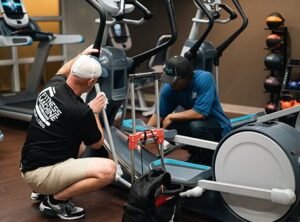
While some minor issues can be resolved with simple troubleshooting, electrical problems often require expert knowledge. Attempting to repair complex electrical components without proper training can be dangerous and may cause further damage to the machine.
You should call a professional technician if:
- You suspect an internal wiring or component issue.
- A machine repeatedly trips a circuit breaker.
- You smell burning plastic or rubber.
- The machine’s motor or resistance is behaving erratically.
- You see an error code that you cannot resolve with the user manual.
A professional technician has the diagnostic tools and expertise to safely identify the root cause of the problem and perform the necessary repairs, whether it’s replacing a motor control board, rewiring a console, or sourcing the correct replacement parts.
Protect Your Investment with Professional NJ Repair Services
Your gym equipment is a significant investment. Proactive maintenance and prompt, professional repairs are the keys to maximizing its lifespan and ensuring the safety of your members or family. Don’t let a small electrical issue turn into a major, costly breakdown.
If you’re experiencing any of these electrical problems with your fitness equipment in New Jersey, our team at NJ Fitness Equipment Repair is here to help. We specialize in diagnosing and repairing all types of electrical issues for treadmills, ellipticals, bikes, and more. Contact us today to schedule a service call and keep your gym running smoothly and safely.