
A treadmill rarely fails all at once. It warns you first. Learning the signs your treadmill needs repair helps you fix small problems before they turn into a burnt motor or a cracked walking deck. We work on home and commercial machines every week, and the same early symptoms show up again and again. Catch them early, and you save money. Ignore them, and a $150 service call can become a $600 rebuild.
This guide walks you through the exact warning signs our technicians look for during a treadmill inspection. You will learn what each sign means, why it happens, and when to call a professional.
Why Early Treadmill Repairs Matter
Early treadmill repairs matter because most major failures start as minor, fixable issues. A slipping belt strains the drive motor. A dry walking deck wears the running belt. One neglected part damages the next.
Here is what early action protects:
- Your budget. Small fixes cost less than replacing a controller board or drive motor.
- Your safety. A worn belt or faulty safety key can cause slips and falls.
- Your machine’s lifespan. Regular treadmill maintenance can add years to a quality machine.
We see this pattern in gyms, hotels, apartment fitness rooms, and home offices. The owners who schedule preventive maintenance spend far less over time than those who wait for a complete breakdown.
10 Signs Your Treadmill Needs Professional Repair Before It Breaks Down
The clearest signs your treadmill needs repair fall into ten categories. Each one points to a specific mechanical or electrical cause. Below, we break down what happens, why, the risks, a safe DIY check, and when to call a treadmill technician.
1. Strange Noises From the Belt or Motor
What happens: You hear grinding, squealing, or knocking during use. This is one of the most common reasons a treadmill starts making noise.
Why it happens: Worn roller bearings, a loose running belt, or debris in the motor cause abnormal sounds. A dry walking deck also creates friction and squeal.
Risks: Ignored noise often signals failing bearings or a straining drive motor.
DIY check: Unplug the machine. Look for objects under the belt and check that the belt sits centered on the rollers.
When to call a pro: Grinding or knocking from the motor area needs professional treadmill diagnostics. We inspect the bearings and drive belt directly.
2. Treadmill Belt Slipping or Sticking
What happens: The running belt hesitates, slips, or feels jerky under your feet, especially when you push off.
Why it happens: Treadmill belt slipping usually comes from a loose or overstretched belt, low lubrication, or a worn drive belt.
Risks: A slipping belt is a fall hazard and forces the motor to work harder.
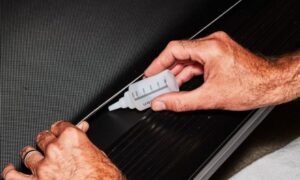
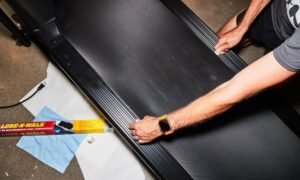
DIY check: Confirm the deck has proper lubrication and that belt tension follows your manual’s specs.
When to call a pro: If tightening and lubrication do not fix it, you likely need belt replacement or a drive belt inspection.
3. Burning Smell During Operation
What happens: You notice a burning rubber or electrical odor while the treadmill runs.
Why it happens: Friction from a misaligned belt, worn brushes in the drive motor, or overloaded electrical components produce heat and smell.
Risks: A burning smell is a serious safety hazard and can point to electrical failure or fire risk.
DIY check: Stop and unplug the machine immediately. Do not keep using it.
When to call a pro: Always. Any burning smell means electrical components may be failing. We do not recommend running the machine again until a technician inspects it.
4. Speed Fluctuations
What happens: The treadmill speeds up or slows down on its own without any input from you.
Why it happens: A failing speed sensor, a worn drive belt, or a fault on the motor controller sends inconsistent signals.
Risks: Sudden speed changes can throw off your balance and cause injury.
DIY check: Test the machine on a firm, level floor and confirm the belt is properly tensioned.
When to call a pro: Persistent speed swings point to controller board or speed sensor issues, which require professional diagnostic testing.
5. Incline Problems
What happens: The incline sticks, moves slowly, makes noise, or stops responding to the console.
Why it happens: A worn incline motor, calibration drift, or a wiring fault interrupts the lift function.
Risks: A stuck incline limits your workout and strains connected components.
DIY check: Run the incline calibration routine listed in your owner’s manual.
When to call a pro: If calibration fails, the incline motor or its wiring needs a professional repair.
6. Treadmill Error Codes
What happens: The console displays a code such as E1, E2, or a lubrication warning.
Why it happens: Treadmill error codes are built-in alerts. They flag faults in the speed sensor, motor controller, or controller board.
Risks: A persistent code usually means a component is failing or already failed.
DIY check: Look up the code in your manual. Some clear after a reset or basic maintenance.
When to call a pro: If the code returns after a reset, book a treadmill repair service. Repeating error codes rarely fix themselves.
7. Console Malfunction
What happens: The screen freezes, flickers, shows wrong data, or the buttons stop responding.
Why it happens: Treadmill console problems come from loose wiring, moisture, power surges, or a failing display board.
Risks: A dead console removes your speed, incline, and safety controls.
DIY check: Confirm all cables are seated and try a full power cycle by unplugging for 60 seconds.
When to call a pro: If the console stays unresponsive, the wiring harness or display board needs inspection.
8. Excessive Vibration
What happens: The whole frame shakes or the belt thumps rhythmically as you walk or run.
Why it happens: A misaligned belt, loose bolts, uneven rollers, or a warped walking deck cause vibration.
Risks: Ongoing vibration loosens hardware and accelerates wear across the machine.
DIY check: Tighten visible frame bolts and confirm the machine sits level.
When to call a pro: If vibration continues, we check belt alignment, roller condition, and deck flatness.
9. Motor Overheating
What happens: The motor housing feels very hot, or the machine shuts down mid-workout to cool.
Why it happens: Treadmill motor problems often trace back to a strained drive motor, poor lubrication, worn brushes, or dust buildup blocking airflow.
Risks: Overheating can permanently damage the drive motor and controller board.
DIY check: Vacuum dust from the motor compartment and confirm the deck is lubricated.
When to call a pro: Repeated overheating needs professional attention before the motor burns out for good.
10. Frequent Shutdowns or Treadmill Won’t Start
What happens: The machine powers off randomly, trips the breaker, or the treadmill won’t start at all.
Why it happens: Causes include a faulty safety key, a tripped internal breaker, a bad power cord, or a failing controller board.
Risks: Electrical faults left unchecked can damage components and create fire risk.
DIY check: Confirm the safety key is fully seated and the machine is plugged directly into a grounded outlet, not a power strip.
When to call a pro: If it still won’t start or keeps shutting down, the electrical components need a technician.
DIY Maintenance vs Professional Repair
Some tasks are safe to handle yourself. Others involve electrical components and calibration that require a trained hand. Here is how we draw the line.
| Issue | DIY | Professional Repair |
| Squeaking from dry deck | Apply approved lubrication | Not needed unless noise continues |
| Belt slightly off-center | Adjust belt alignment per manual | Persistent misalignment or roller wear |
| Loose frame bolts | Tighten with basic tools | N/A |
| Treadmill belt slipping | Adjust tension, add lubrication | Belt replacement or drive belt service |
| Burning smell | Stop and unplug immediately | Required. Electrical inspection |
| Recurring error codes | Reset and check manual | Required. Diagnostics needed |
| Motor overheating | Clean dust, lubricate deck | Required if it repeats |
| Console dead | Reseat cables, power cycle | Wiring or display board repair |
| Incline not working | Run calibration | Incline motor or wiring repair |
How to Prevent Major Treadmill Repairs
Preventive maintenance is the single best way to avoid costly breakdowns. A short, regular routine keeps the belt, motor, and deck in good shape.
Follow this treadmill maintenance checklist:
- Wipe down the belt and frame after each use to remove sweat and dust.
- Vacuum under the motor cover every one to three months.
- Lubricate the walking deck per your manufacturer’s schedule, often every three to six months.
- Check belt alignment monthly and adjust if it drifts.
- Tighten bolts on the frame and console every few months.
- Schedule professional service once a year for home machines and more often for commercial treadmills in gyms, hotels, or schools.
We recommend following the maintenance intervals in your manufacturer’s manual, since brands like NordicTrack, ProForm, and Sole Fitness list specific lubrication and inspection schedules.
When Should You Replace Instead of Repair?
Repair makes sense when the machine is worth more than the fix. Replacement makes sense when repairs stack up or the frame itself is failing.
Consider replacing your treadmill when:
- The repair cost is more than half the price of a comparable new machine.
- The drive motor and controller board both need replacement.
- The frame or walking deck is cracked or badly warped.
- The model is old and parts are no longer available.
Consider repairing when:
- The machine is only a few years old.
- The frame and motor are sound.
- The problem is a single part like a belt, roller, or console.
A quality treadmill can last 7 to 12 years with good care. If yours is well within that range, repair is usually the smarter choice.
Frequently Asked Questions
What are the signs a treadmill needs repair?
The main signs are strange noises, a slipping belt, burning smells, speed fluctuations, incline faults, error codes, console problems, vibration, motor overheating, and frequent shutdowns.
Why is my treadmill making noise?
Noise usually comes from worn roller bearings, a loose or dry belt, or debris in the motor. Grinding and knocking need professional inspection.
Why is my treadmill belt slipping?
Belt slipping comes from loose tension, low lubrication, or a worn drive belt. Adjust tension and lubricate first. If it continues, you may need belt replacement.
Can I repair my treadmill myself?
You can handle lubrication, belt tensioning, alignment, bolt tightening, and cleaning. Leave electrical components, motor repairs, and recurring error codes to a technician.
How often should a treadmill be serviced?
Home treadmills benefit from professional service once a year. Commercial treadmills in gyms and hotels need service every three to six months due to heavy use.
What causes treadmill motors to fail?
Motors fail from strain caused by a tight belt, poor lubrication, dust buildup, worn brushes, or an overloaded circuit.
How much does treadmill repair usually cost?
Costs vary by part and region. Belt and roller work is usually modest, while motor or controller board replacement costs more. Get a written quote before approving any repair.
Is it dangerous to keep using a damaged treadmill?
Yes. Burning smells, slipping belts, and random speed changes create real injury and fire risks. Stop use until the issue is fixed.
How can I prevent treadmill breakdowns?
Clean the belt, lubricate the deck, check alignment, tighten bolts, and schedule regular professional maintenance.
Should I search for treadmill repair near me or fix it myself?
For electrical faults, motor problems, or persistent error codes, search for a qualified treadmill repair company. For basic upkeep, a manual and simple tools are enough.
Conclusion
Knowing the signs your treadmill needs repair puts you in control before a small issue becomes a full breakdown. Watch for strange noises, a slipping belt, burning smells, speed swings, incline faults, error codes, console problems, vibration, motor overheating, and frequent shutdowns. Each one points to a fixable cause when you catch it early.
Handle the basics yourself, and call a professional the moment electrical components, motors, or safety are involved. If you have noticed any warning sign on this list, schedule a professional treadmill inspection now. A short diagnostic visit today protects your machine, your budget, and your safety for years to come.