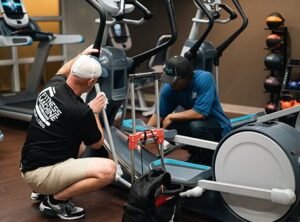
If your treadmill or elliptical won’t power on, check the outlet, power cord, and safety key first. Over 60% of gym equipment issues come from simple electrical faults or loose connections. Fixing them early can save you time and money on major repairs.
When Gym Equipment Suddenly Stops Working
You’re ready to start your workout, but your machine stays silent. No lights, no screen, no motion. It’s a common problem that happens more often than you think. In fact, most gym owners and home users report power issues as the number one equipment complaint, especially in older machines.
The good news is that many power problems are easy to fix without needing new parts. Sometimes it’s just a tripped breaker, a loose plug, or a misplaced safety key. Still, if your machine doesn’t respond after basic checks, it might point to a deeper electrical or internal issue that needs professional attention.
If you’re stuck and need quick help, you can always search for fitness equipment repair or gym equipment repairs near me to find local technicians who can troubleshoot your machine safely.
Common Reasons Your Gym Equipment Won’t Turn On
1. Power Connection Issues
Most machines don’t start because the cord is loose or unplugged. Always check if the power cord is firmly connected to both the outlet and the machine. Try plugging it into another socket to test if the outlet works.
2. Tripped Circuit Breaker or Fuse
High-energy machines like treadmills and ellipticals can overload circuits, especially when used with other heavy devices. Reset the breaker or replace the fuse to restore power.
3. Damaged Power Cord
Over time, cords can fray or break, cutting off electricity. If you see damage, don’t try to tape or repair it yourself. Replace it or call a technician for safety.
4. Faulty Power Switch or Console
If the outlet and cord are fine, the problem might be inside the control board. A malfunctioning switch, loose wiring, or shorted board can stop the display from turning on.
5. Missing or Loose Safety Key
Many treadmills won’t start without the safety key in place. Check that it’s fully inserted and working. Sometimes this simple fix solves everything.
If none of these quick checks work, contact fitness machine technicians or a treadmill repairman for a proper diagnosis. They’ll pinpoint the exact cause and make sure your equipment is safe to use again.
Simple Fixes You Can Try at Home
Check and Reset the Outlet
Plug in another device to confirm the outlet works. If not, reset the breaker or test a new outlet.
Inspect the Cord and Plug
Look for visible damage or loose connections. Replace damaged cords immediately.
Clean Dust from the Console
Dust buildup inside the console can block power flow. Gently wipe and clean around the buttons and ports.
Reinsert the Safety Key
This is one of the most overlooked steps. Make sure it’s inserted correctly because your treadmill or elliptical won’t run without it.
If you’ve tried these fixes and your machine still won’t start, it’s best to call gym equipment repair experts or look up treadmill repairs near me for fast, professional service.
When to Call a Professional
Sometimes, no matter how many times you check the plug or switch, the machine just won’t respond. That’s usually a sign of a deeper problem like a damaged control board, faulty motor, or internal wiring issue. These repairs need proper tools and experience.
Calling an expert ensures the problem is fixed correctly and safely. Certified technicians can test circuits, replace components, and make sure your equipment meets safety standards before you use it again.
Need fast help? Reach out to fitness equipment repairs near me or gym equipment repair professionals to get your treadmill or elliptical running again quickly.
How to Prevent Power Problems in the Future
Routine maintenance goes a long way. Keep your machines clean, use surge protectors, and don’t overload outlets. Schedule professional inspections every few months, especially if you run a commercial gym.
Here are two simple ways to reduce breakdowns:
- Keep cords and outlets clear of dust and moisture.
- Don’t ignore small warning signs like flickering screens or unusual noises.
A little care can prevent big repair costs down the line. If you notice power flickers or startup delays, contact a treadmill repairman or fitness machine technicians before the issue worsens.
FAQs About Gym Equipment Not Turning On
1. Why won’t my treadmill power on?
It’s often due to a loose plug, missing safety key, or tripped breaker. Check these first before calling for service.
2. Can a damaged power cord cause my machine to stop working?
Yes. A frayed or bent cord can cut power completely and may even be unsafe to use.
3. Should I open the machine to check the wiring?
No. It’s best to let trained fitness machine technicians handle electrical parts for safety reasons.
4. How often should I check my machine’s power system?
At least once every six months, or sooner if you notice any power issues.
5. Is it expensive to fix gym equipment that won’t turn on?
Not usually. Many problems are minor and can be fixed quickly by local gym equipment repair experts.
Final CTA: Get Your Gym Equipment Working Again Today
Don’t let a power issue stop your workouts. A quick inspection or repair can bring your machine back to life and prevent bigger problems later.
Contact local professionals for fitness equipment repair, treadmill repair near me, gym equipment repairs near me, or fitness equipment repairs near me to keep your treadmill, elliptical, or bike running smoothly and safely.