
A broken treadmill or a jammed cable machine brings your workout routine to a sudden halt. Whether you manage a bustling commercial facility or lift weights in your garage, broken gear creates instant frustration. You immediately face a tough financial decision. Do you spend money fixing the broken machine, or do you cut your losses and buy a brand-new model?
Making the wrong choice costs you time, money, and momentum. Navigating fitness equipment repair requires a clear understanding of your machine’s current value, the cost of parts, and the expected lifespan of the unit.
In this guide, we will break down exactly how to evaluate your broken gym machines. You will learn expert strategies for weighing repair vs replace gym equipment, understand average repair costs, and discover how to avoid throwing money at a machine that belongs in the scrap yard.
The Core Dilemma: Repair vs Replace Gym Equipment
Facility managers and home gym owners often fall into the trap of emotional attachment. You spent thousands of dollars on a premium elliptical five years ago, so paying a few hundred dollars to fix it feels like the logical move. However, expert decision-making relies on cold, hard math rather than sentiment.
A reliable industry standard is the “50% Rule.” If the cost of the repair exceeds half the price of a comparable new machine, you should replace it. You also need to factor in the age of the equipment. Most commercial cardio machines last seven to ten years, while home machines might last five to twelve years depending on usage. If your machine is nearing the end of its expected life cycle, investing in a major repair rarely makes financial sense.
Age and Part Availability
Manufacturers eventually stop making replacement parts for older models. If your diagnostic technician struggles to find a replacement motor controller or a specific console board, that is a massive red flag. Paying a premium for rare, discontinued parts is a bad investment. You will likely face the exact same problem when a different component fails six months later.
Navigating Treadmill Repair Cost
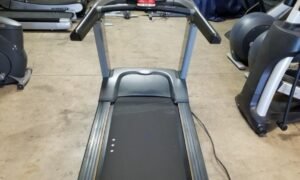
Treadmills take more abuse than almost any other piece of fitness equipment. The constant pounding, friction, and sweat accumulation lead to inevitable wear and tear. Understanding the standard treadmill repair cost helps you make informed choices when your belt stops moving.
Minor Repairs
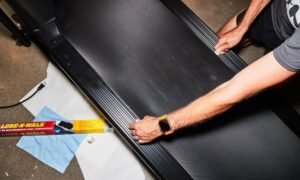
Minor issues include worn walking belts, failing speed sensors, or broken drive belts. Replacing a walking belt typically costs between $150 and $300 for parts and labor. Because this represents standard maintenance rather than a catastrophic failure, performing this fitness equipment repair almost always makes sense. Replacing a drive belt is even cheaper and restores your machine to smooth operation quickly.
Major Repairs
Major issues change the equation entirely. If your drive motor burns out, or the lower control board shorts out, you are looking at significant expenses. A new motor can cost anywhere from $300 to $600, plus labor. If you own an entry-level home treadmill that originally cost $800, spending $500 on a new motor violates the 50% rule. In this scenario, replacement is the smarter financial move.
Commercial vs Home Costs
Commercial treadmill repairs often cost more due to the heavy-duty nature of the parts. However, a commercial treadmill also carries a much higher replacement value (often $5,000 to $10,000). Spending $800 to rebuild a commercial AC motor is usually a highly profitable decision, extending the life of a valuable asset by several years.
Real-World Scenario: The Home Gym
Let us look at a practical example for a home gym owner. Sarah has a five-year-old mid-range elliptical that started making a terrible grinding noise. The machine originally cost $1,200. She calls a technician for fitness equipment repair.
The technician diagnoses a destroyed flywheel bearing and a worn drive belt. The total quote for parts, labor, and the initial service call comes to $350.
Should Sarah fix or replace it?
The repair cost ($350) is well under 50% of the replacement cost ($1,200). The machine is only five years old, meaning it likely has another three to five years of life left. The parts are readily available. In this scenario, approving the repair is the most financially sound decision. She avoids spending over a thousand dollars and gets her machine running like new.
Real-World Scenario: The Commercial Facility
Commercial settings require a slightly different calculus. Facility owners must factor in machine downtime, member satisfaction, and potential liability.
Imagine a commercial gym with a ten-year-old functional trainer. One of the primary guide rods is bent, the cables are frayed, and the weight stack pins are stripped. The repair quote is $900. A new, equivalent functional trainer costs $3,500.
While $900 is less than 50% of $3,500, the gym owner must look deeper. The machine is a decade old. Frayed cables and bent rods on heavy strength equipment present a serious liability risk if they fail during use. Furthermore, an “Out of Order” sign sitting on a popular machine for three weeks while waiting for parts frustrates paying members. In this case, retiring the old machine and investing in a brand-new, warranty-backed functional trainer is the superior business decision.
4 Signs It Is Time to Call a Repair Technician
Catching problems early keeps minor fixes from turning into major replacements. Call a professional if you notice any of these warning signs:
- Jerky Movements: Treadmill belts or elliptical arms that catch or hesitate indicate severe friction or failing drive components.
- Burning Smells: An electrical burning smell means a motor or circuit board is overheating. Unplug the machine immediately.
- Error Codes: Modern consoles tell you exactly when something is wrong. Do not ignore persistent error codes.
- Frayed Cables: On strength equipment, a frayed cable is a snapping hazard. Replace cables at the first sign of exposed wire.
3 Clear Indicators You Should Replace Your Machine
Sometimes, letting go is the best option. You should start shopping for new equipment if you encounter these situations:
- Repeated Breakdowns: If you have paid for fitness equipment repair three times in the last year on the same machine, you are throwing good money after bad.
- Obsolete Technology: If the console cannot connect to modern fitness apps, heart rate monitors, or your gym’s tracking software, an upgrade provides immediate value to your users.
- Structural Rust or Cracks: You can replace a motor, but you cannot easily replace a cracked, rusted steel frame. Structural compromise means the machine is unsafe and must go.
The Value of Preventative Maintenance
The best way to avoid the stress of deciding between repair vs replace gym equipment is to extend the lifespan of your machines through preventative maintenance.
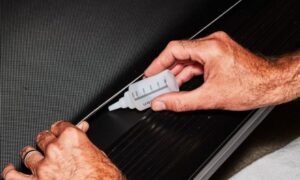
For home users, this means wiping down your machines after every use to prevent sweat corrosion. It means vacuuming the dust out of the treadmill motor compartment twice a year. It means lubricating your treadmill walking belt according to the manufacturer’s schedule.
For commercial facilities, regular maintenance is non-negotiable. Setting up a quarterly service contract with a local technician catches small issues before they become catastrophic failures. Technicians will tighten loose bolts, replace worn belts before they snap, and recalibrate sensors. This proactive approach drastically reduces your long-term treadmill repair cost and keeps your members happy.
Making Your Final Decision
Dealing with broken gym machines requires logic, basic math, and an honest assessment of your equipment’s lifespan. By relying on the 50% rule and understanding your machine’s specific repair costs, you can make confident, expert-level decisions.
Do not let emotional attachment drain your wallet. Evaluate the true cost of the repair against the value of a new machine. If the math makes sense, schedule your fitness equipment repair today and get back to training. If the numbers point the other way, embrace the opportunity to upgrade your space with modern, reliable equipment that will serve you well for years to come.