If your treadmill is squeaking, grinding, or rattling, it likely needs cleaning, lubrication, or belt adjustment. Fixing minor issues early prevents costly repairs later.
When a Noisy Treadmill Becomes a Warning Sign
You start your run and suddenly hear a squeak or rattle under your feet. Annoying? Definitely. But more importantly, that sound could mean your treadmill needs attention. Studies show that nearly 70% of treadmill repairs come from small maintenance issues left unchecked.
Noises are your treadmill’s way of telling you something’s off. It could be dust on the belt, loose screws, or a worn motor part. Fixing the cause early saves you from major repairs or replacements later on. Regular checks not only make your treadmill quieter but also extend its lifespan.
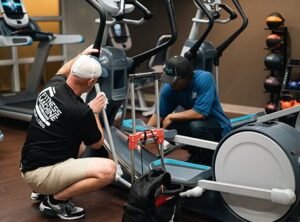
If your machine already sounds off, don’t ignore it. Contact a local expert for fitness equipment repair or look up treadmill repair near me to get it checked quickly before the damage spreads.
Common Causes of Treadmill Noise
1. Loose Bolts or Screws
Over time, vibration from running loosens parts, causing rattling or clunking sounds. Check and tighten all visible screws and bolts once a month to avoid that.
2. Worn Out Belt
If your treadmill belt is dry or uneven, it can squeak or slip. Lubricate it regularly and make sure it’s centered on the deck.
3. Dirt and Dust Build-Up
Dust often collects inside the motor area and rollers. That buildup can make grinding noises and overheat the machine. Clean the area around your treadmill weekly and vacuum underneath.
4. Faulty Bearings
Bearings in the rollers help the belt move smoothly. When they wear down, you’ll hear clicking or scraping. Replacing them early keeps your treadmill running quietly.
5. Uneven Floor
A treadmill that isn’t level can create knocking or shaking noises. Use a mat or adjust the machine’s feet for better balance.
If you’ve tried basic fixes but the noise continues, call fitness machine technicians or search for treadmill repairs near me for a professional inspection.
Easy Fixes You Can Try at Home
Clean and Lubricate the Belt
A dry or dusty belt is the most common reason for squeaking. Use a silicone-based lubricant once every few months to reduce friction and noise.
Tighten and Align
Check the belt tension and make sure it’s centered. A loose belt can slap or slide while you run.
Check the Motor Area
Unplug your treadmill and open the motor cover. Gently clean dust or debris using a soft brush or vacuum. Never use water or liquid cleaners.
Balance the Machine
If your treadmill shakes, move it to a level surface or place a rubber mat underneath. That reduces vibration and noise on hard floors.
Need professional help? Book a visit with gym equipment repairs near me or call a certified treadmill repairman for quick and safe service.
When to Call a Professional
If you’ve cleaned, tightened, and lubricated everything but your treadmill still sounds loud, it’s time to get help. Persistent noise could mean worn bearings, a failing motor, or electrical issues. Professionals have the right tools to test and replace parts safely.
Hiring an expert also helps protect your warranty and prevents costly mistakes. A trained technician can spot problems before they turn serious and save you from full replacements later on.
For fast and reliable fixes, reach out to fitness equipment repairs near me or local experts offering gym equipment repair and maintenance services.
Preventing Future Treadmill Noise
Routine care is the best way to keep your treadmill running quietly. Clean your machine weekly, lubricate it every few months, and schedule a professional checkup at least twice a year. Keep it in a dry area and use a protective cover when not in use.
Avoid overloading your treadmill’s weight limit, and give the motor a rest between long runs. A few simple habits can add years to your equipment’s life and keep your workouts peaceful.
To stay worry-free, schedule regular visits from fitness machine technicians or trusted gym equipment repair providers near you.
Keep Your Treadmill Smooth and Quiet
A little care goes a long way. Regular cleaning, lubrication, and inspections can prevent most treadmill noises and costly repairs. Don’t wait until a small sound turns into a big problem.
Call trusted experts for fitness equipment repair, gym equipment repair, treadmill repairman, or treadmill repairs near me to keep your machine running like new.
FAQs About Treadmill Noise
1. Why is my treadmill squeaking while I run?
It’s usually because the belt needs lubrication or the bolts have loosened. Regular cleaning and tightening can fix that.
2. Can I fix a noisy treadmill on my own?
Yes, for minor issues like tightening screws or lubricating the belt. But call a pro for electrical or motor noise.
3. What kind of lubricant should I use?
Always use a silicone-based treadmill lubricant. Avoid oils or sprays that can damage the belt.
4. Why does my treadmill make a grinding sound?
That’s often from dust buildup in the motor or worn roller bearings. Cleaning and replacing parts usually fix it.
5. How often should I get my treadmill serviced?
Every 3–6 months for regular users, and more often for commercial gyms or heavy use.