You are hitting your stride on the treadmill, heart pumping, miles ticking by. Suddenly, the belt violently jerks, a loud grinding noise erupts, and the machine stops dead. You stumble forward, barely catching your balance on the side rails. This scary scenario happens far too often when facility managers and home gym owners ignore early gym equipment repair signs.
Fitness machines endure massive amounts of daily stress. Timely repairs prevent minor wear and tear from morphing into catastrophic failures. Paying attention to these subtle changes extends your equipment lifespan and keeps users out of the emergency room.
As fitness experts, we know exactly what a failing machine sounds and feels like. We wrote this guide to help you spot the top warning signs before disaster strikes. Whether you manage a large commercial facility or a basement workout space, recognizing these red flags ensures your workouts remain safe, effective, and uninterrupted.
Why You Must Pay Attention to Equipment Health
Experience: We have seen it all on the gym floor. From treadmills abruptly stopping mid-run to weight machine cables snapping under heavy loads, equipment failures are not just inconvenient—they are terrifying. We know the exact frustration of a slipping belt or a stationary bike that suddenly sounds like a lawnmower.
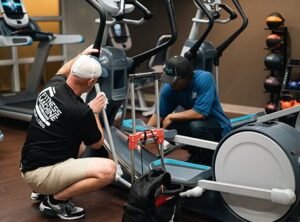
Expertise: Professional repair technicians do not just fix broken parts; they listen to the machines. A certified technician can hear a failing motor bearing weeks before it seizes. They look for frayed cables, uneven track wear, and electrical shorts that the average user misses. We use these same diagnostic frameworks to identify early warning signs.
Authoritativeness: According to industry best practices and commercial gym maintenance standards, daily inspections and prompt repairs are non-negotiable. Facilities must adhere to strict manufacturer guidelines regarding load capacities, lubrication intervals, and belt tension to maintain warranties and safety compliance.
Trustworthiness: Ignoring these warning signs introduces severe safety risks. A snapped cable on a lat pulldown machine can cause blunt force trauma, while a short-circuiting treadmill motor presents a severe fire hazard. Delaying a necessary maintenance service endangers users and leads to costly property damage.
Common Gym Equipment Repair Signs You Should Never Ignore
Do not wait for a machine to break down completely before you take action. Watch out for these four undeniable warning signs.
Unusual Noises (Clicking, Grinding)
A healthy fitness machine hums smoothly. If you hear grinding, screeching, or repetitive clicking, you have a mechanical problem. Grinding often indicates failing bearings or metal-on-metal friction. Clicking usually points to loose components or debris caught in the moving parts.
Slow or Uneven Performance
Machines should offer consistent resistance and speed. If an elliptical feels sluggish or a stepper suddenly drops resistance, the internal mechanisms are failing. This uneven performance disrupts workouts and can cause joint strain for the user.
Overheating Motors
Place your hand near the motor housing after a workout. While it should feel warm, it should never feel scorching hot. An overheating motor means the machine is working too hard, usually due to excessive friction from a lack of lubrication or a failing drive board.
Electrical Issues
Flickering console screens, unresponsive buttons, and erratic heart rate monitors are clear indicators of electrical problems. Sweat often corrodes internal wires over time. If your machine randomly resets during a workout, you need an electrical inspection immediately.
Broken Treadmill Symptoms Explained
Treadmills require more maintenance than almost any other piece of gym equipment. Look out for these specific broken treadmill symptoms.
Belt Slipping or Jerking
A treadmill belt should glide effortlessly over the deck. If the belt hesitates, slips, or jerks when your foot strikes it, you face a serious tripping hazard. This usually means the belt needs tensioning, lubrication, or a complete replacement.
Sudden Stop During Use
Nothing causes a panic quite like a treadmill shutting off at eight miles per hour. Sudden stops often stem from a tripped internal breaker, a faulty motor controller, or severe overheating.
Speed Inconsistencies
If you set the machine to five miles per hour, but it surges to seven and drops back down to four, the motor controller is likely failing. Speed inconsistencies make pacing impossible and significantly increase the risk of falls.
Display Errors
Modern treadmills feature complex software. If the console throws error codes (like “E1” or “E2”), freezes, or fails to track metrics, the control board requires attention. Check your user manual to decode specific error messages.
Burning Smell
Never ignore a burning smell. A scent resembling burning rubber usually means the running belt is generating too much friction against the deck. A scent resembling burning plastic or ozone indicates melting wires or a frying motor. Unplug the machine immediately if you smell burning.
Fitness Machine Troubleshooting Guide
Before you panic, run through these step-by-step basic checks. Simple fitness machine troubleshooting often resolves minor glitches.
Power Supply Check
Start at the wall. Ensure the power cord sits firmly in the outlet and the machine. Check the power switch on the base of the unit. Test the wall outlet with another device, like a lamp, to ensure the circuit breaker has not tripped.
Lubrication Check
Friction destroys gym equipment. Lift the edges of your treadmill belt and feel the deck underneath. It should feel slightly slick. If it feels bone dry, you must apply manufacturer-approved silicone lubricant.
Belt Alignment
Turn the treadmill on at a slow speed and stand behind it. Watch the belt. It should track perfectly in the center of the deck. If it drifts to the left or right, adjust the rear roller bolts according to your manual to pull it back to the center.
Loose Bolts or Parts
Grab a wrench and an Allen key set. Walk around your weight benches, ellipticals, and stationary bikes. Tighten every visible bolt. Vibrations naturally loosen hardware over time, which causes annoying squeaks and reduces structural stability.
When to Call a Professional Repair Service
While basic troubleshooting handles minor hiccups, some situations require an expert hand.
Persistent Issues After Troubleshooting
If you aligned the belt, lubricated the deck, and checked the power, but the machine still jerks, stop using it. Continuing to run a malfunctioning machine will destroy the expensive internal components.
Electrical or Motor Failure
Never attempt to rewire a console or rebuild a motor yourself. These components carry high voltage and require specialized diagnostic tools. A certified repair technician knows how to safely test and replace circuit boards without causing further damage.
Safety Hazards
If a machine poses an immediate threat—like a frayed steel cable on a functional trainer or a cracked weld on a squat rack—tag it “Out of Order” instantly. Do not let anyone use it until a professional signs off on the repair.
Commercial Gym Equipment Breakdowns
Commercial facilities cannot afford prolonged downtime. If a machine breaks in a public gym, call a commercial maintenance service right away. Attempting DIY repairs on commercial equipment often voids the manufacturer warranty and opens your business to immense liability.
Preventive Gym Equipment Maintenance Tips
The best way to handle repairs is to prevent them entirely. Implement this routine to protect your investment.
Weekly Inspection Checklist
Walk the floor once a week. Check weight machine cables for fraying, inspect carabiners for wear, and ensure all safety pins lock securely into place. Listen to every cardio machine while it runs.
Cleaning Schedule
Sweat is highly corrosive. Wipe down all vinyl pads, consoles, and handgrips daily with a mild, non-abrasive cleaner. Vacuum the floor around and under treadmills weekly to prevent dust from getting sucked into the motor housing.
Lubrication Routine
Create a strict calendar for lubrication. Treadmill decks typically need lubrication every 150 miles or every three months. Guide rods on selectorized weight machines need a light coating of silicone spray monthly to ensure the weight stacks glide smoothly.
Load Management Tips
Respect the weight limits of your machines. Do not allow users to slam weight stacks or drop heavy dumbbells onto unreinforced benches. Proper usage drastically extends your equipment lifespan.
FAQ Section
What are early signs of treadmill failure?
The earliest signs include a subtle hesitation in the belt when your foot lands, a slight burning smell after a long run, squeaking noises from the rollers, and the console resetting randomly.
How often should gym equipment be serviced?
Home gym equipment generally requires a thorough service check once a year. High-traffic commercial gym equipment needs professional servicing every three to six months to maintain safety standards and warranties.
Can I repair gym equipment myself?
You can handle basic maintenance like tightening bolts, centering belts, and applying lubrication. However, you should leave electrical work, motor replacements, and snapped cable repairs to a certified repair technician to ensure gym safety.
What causes treadmill belt slipping?
A slipping belt usually results from improper tension, a lack of lubrication, or a worn-out drive belt connecting the motor to the front roller. Adjusting the tension bolts at the rear of the deck often solves the problem.
Conclusion
Ignoring gym equipment repair signs leads to dangerous workouts and massive replacement costs. Whether you notice broken treadmill symptoms like a slipping belt or hear grinding noises from your elliptical, taking immediate action protects both the user and the machine. By following basic fitness machine troubleshooting steps and sticking to a strict preventive maintenance routine, you can maximize your equipment lifespan and ensure peak performance.
If your troubleshooting efforts fail to fix the problem, or if you encounter electrical issues and frayed cables, do not risk it. Bring in the experts. Contact a professional gym equipment maintenance service today to schedule a comprehensive inspection and keep your fitness journey moving safely forward.