
To oil a treadmill, turn it off and unplug it, lift the walking belt on each side, apply manufacturer-recommended silicone lubricant beneath the belt along the deck, reposition the belt, then run the treadmill at low speed for 2–3 minutes to distribute the lubricant evenly. Always check your owner’s manual first—lubrication type and frequency vary by model.
Knowing how to oil a treadmill is one of the most important things you can do to protect your investment. A well-lubricated treadmill runs quieter, lasts longer, and puts less strain on the motor and belt. Skip this simple maintenance step, and you could find yourself dealing with premature belt wear, overheating, or costly repairs down the road.
This guide walks you through every step of the process—from choosing the right lubricant to spotting early warning signs that your machine needs attention. Whether you own a home treadmill or manage a commercial gym in New Jersey or New York, this information applies to you.
Can You Oil a Treadmill?
Yes—most treadmills are designed to be lubricated by the owner as part of routine maintenance. Many manufacturers include lubrication instructions in their owner’s manuals and even recommend a specific lubrication schedule.
That said, not every treadmill needs to be oiled the same way. Some models come pre-lubricated at the factory or use a self-lubricating belt. This is why checking your manual before applying anything is so important.
Why Does a Treadmill Need Lubrication?
The walking belt on a treadmill slides across the deck thousands of times during each use. Without adequate lubrication, that friction builds up fast. Over time, it generates heat, wears down the belt and deck surface, and forces the motor to work harder than it should.
Regular lubrication reduces friction between the belt and deck, which helps:
- Extend the lifespan of the belt and motor
- Keep the machine running smoothly and quietly
- Prevent overheating
- Reduce the risk of unexpected breakdowns
Think of it like changing the oil in your car. It’s a small task that prevents major, expensive problems later.
What Lubricant Should You Use on a Treadmill?
Most treadmill manufacturers recommend 100% silicone lubricant—either in liquid or spray form. Silicone is safe for rubber belts, doesn’t attract dust or debris, and won’t degrade plastic or deck surfaces.
Avoid these lubricants entirely unless your manufacturer specifically instructs otherwise:
- Motor oil
- Cooking or vegetable oil
- Grease or petroleum-based products
- WD-40
These substances can damage the belt, attract grit that accelerates wear, and may void your warranty. When in doubt, contact your treadmill manufacturer or consult a qualified treadmill repair technician before applying anything.
How to Oil a Treadmill Step by Step
Step 1: Turn Off and Unplug the Treadmill
Safety first. Power down the machine completely and unplug it from the wall outlet. Never attempt to lubricate a treadmill while it’s running or still connected to power.
Step 2: Check the Owner’s Manual
Before applying anything, locate your owner’s manual and review the lubrication section. It will tell you what type of lubricant to use, how much to apply, and how often. If you can’t find your manual, search for the model number on the manufacturer’s website.
Step 3: Inspect the Belt and Deck
Take a moment to look at the belt’s surface and edges. Check for signs of excessive wear, fraying, or cracking. If the belt is damaged, lubrication alone won’t fix the problem—you may need a treadmill belt replacement before proceeding.
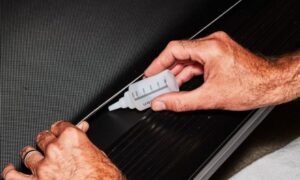
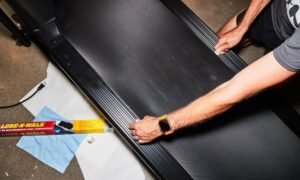
Step 4: Lift the Walking Belt
Loosen the belt slightly by turning the rear roller bolts counterclockwise—just enough to create space between the belt and the deck. You should be able to slide your hand underneath. Do this on both the left and right sides.
Step 5: Apply the Correct Lubricant
Using your silicone lubricant, apply it to the underside of the belt along the center of the deck. Most treadmills require about one ounce (roughly a tablespoon) per side. Apply it in a slow, sweeping motion from the center outward. Don’t oversaturate—too much lubricant can cause the belt to slip.
Step 6: Reposition the Belt
Once lubricated, re-tighten the rear roller bolts to return the belt to its original tension. Make sure the belt is centered on the deck before proceeding.
Step 7: Run the Treadmill Slowly
Plug the treadmill back in and run it at a slow speed—around 3 mph—for 2 to 3 minutes. This helps distribute the lubricant evenly across the full surface of the deck.
Step 8: Check Belt Tracking and Operation
After the slow run, verify that the belt is tracking straight and not drifting to one side. Listen for any unusual sounds. If the belt feels slippery underfoot or drifts during use, you may need to adjust the tension or consult a technician for a belt alignment or treadmill repair service.
How Often Should You Oil a Treadmill?
Lubrication frequency depends on your specific treadmill model and how often you use it. General guidelines suggest:
- Light home use (1–3 hours/week): Every 3–6 months
- Moderate use (3–5 hours/week): Every 1–3 months
- Heavy use (commercial or daily): Monthly or more frequently
Always defer to your owner’s manual over general guidelines. Commercial treadmills in hotel gyms, fitness facilities, and condominiums typically require more frequent preventive maintenance than home units.
How Do You Know Your Treadmill Needs Lubrication?
Your machine will often give you clear signals. Watch for:
- Squeaking or grinding noises during use
- Increased belt resistance or a feeling of heaviness underfoot
- The motor running louder than usual, which suggests extra strain
- Belt sticking or jerking under load
- Visible dryness or discoloration on the underside of the belt
If you notice any of these signs, it’s time to lubricate—or to call in a professional if you’re unsure of the cause.
Common Mistakes When Oiling a Treadmill
Even a straightforward task like lubrication goes wrong sometimes. Here are the most common errors to avoid:
- Using the wrong lubricant. As mentioned, oil-based or petroleum products can damage belts and void warranties.
- Applying too much. Over-lubrication leads to belt slippage and messy buildup.
- Skipping the manual. Every treadmill is different. What works for one model may damage another.
- Lubricating a worn or damaged belt. Lubrication maintains a healthy belt; it doesn’t repair a failing one.
- Not running the belt afterward. Skipping the low-speed run means the lubricant won’t spread properly.
Does Lubricating a Treadmill Stop Belt Slipping?
Lubrication can help in some cases—but not all. If your belt is slipping because it’s too loose, overly worn, or stretched, adding lubricant won’t solve the problem. In some situations, applying lubricant to a slipping belt can actually make slipping worse.
Treadmill belt slipping has multiple possible causes, including belt tension issues, motor problems, or controller faults. If lubrication doesn’t resolve the issue, the underlying cause needs to be diagnosed properly before additional damage occurs.
When Should You Call a Professional Treadmill Repair Technician?
Some treadmill problems go beyond what a lubrication session can fix. Call a professional if you notice:
- The belt continues to slip after proper lubrication and tension adjustment
- Burning smells or unusual heat coming from the motor area
- Error codes appearing on the console
- Loud mechanical noises that don’t resolve after lubrication
- The treadmill stops or stutters unexpectedly during use
NJ Fitness Equipment Repair (Fitness Equipment Repair Specialist LLC) serves home and commercial gym owners across New Jersey and New York, including Rockland County, Westchester, and the Bronx. With 15+ years of experience and same-day service available, the team diagnoses and repairs common treadmill problems quickly—so your machine is back up and running without a long wait.
Keep Your Treadmill Running With the Right Maintenance
Learning how to oil a treadmill is a simple skill that pays off with every mile you log. Regular lubrication keeps the belt and deck in good shape, reduces motor strain, and dramatically extends your equipment’s useful life. Done consistently and correctly, it’s one of the most cost-effective forms of preventive maintenance available to any treadmill owner.
If you’re ever unsure whether your machine needs more than just lubrication, don’t guess. NJ Fitness Equipment Repair offers professional treadmill maintenance and repair services across New Jersey and New York. Call (201)-306-1898 or request service online to schedule an appointment today.
Frequently Asked Questions
What type of oil should I use on a treadmill?
Use 100% silicone lubricant—either liquid or spray—as recommended by most treadmill manufacturers. Do not use motor oil, cooking oil, grease, or WD-40 unless your owner’s manual specifically states otherwise. These substances can damage the belt and may void your warranty.
How do I know if my treadmill needs lubricant?
Common signs include squeaking or grinding noises, a heavy or stiff feeling underfoot, the motor running louder than normal, or visible dryness on the belt’s underside. If you notice any of these, it’s time to lubricate or have the machine inspected.
Can I over-lubricate a treadmill?
Yes. Applying too much lubricant can cause the belt to slip, create messy buildup, and potentially damage internal components. Apply approximately one ounce per side and always follow your manufacturer’s recommended amount.
How often should I lubricate my treadmill?
It depends on usage. Light home use typically requires lubrication every 3–6 months; moderate use every 1–3 months; and heavy or commercial use monthly. Always consult your owner’s manual for model-specific guidance.
Will lubricating the belt fix a slipping treadmill?
Not always. Lubrication can help if friction is the cause, but a slipping belt may also result from improper tension, belt wear, or motor issues. In some cases, adding lubricant to an already-slipping belt can make the problem worse. A professional diagnosis is recommended if the issue persists.
Is it safe to lubricate a treadmill yourself?
Yes, for most standard home treadmills, self-lubrication is safe and straightforward when you follow the correct steps and use the right product. However, if you’re unsure of your machine’s condition or encounter any mechanical issues during the process, consult a qualified technician.
When should I call a professional instead of oiling the treadmill myself?
Call a professional if the belt continues slipping after lubrication, if you smell burning from the motor, if error codes appear on the console, or if the treadmill stutters or stops unexpectedly. These are signs of a deeper issue that lubrication alone cannot fix.
Does NJ Fitness Equipment Repair offer treadmill lubrication and maintenance services?
Yes. Fitness Equipment Repair Specialist LLC provides treadmill maintenance and preventive care for home and commercial equipment across New Jersey and New York. Call (201)-306-1898 or visit njfitnessequipmentrepair.com to schedule a service visit.