You finally built the perfect workout space. But just a few months later, the treadmill belt starts slipping, the stationary bike makes a strange clicking noise, and your weight bench feels a bit shaky. Nothing ruins a good workout faster than equipment that wears out far too quickly.
Quality fitness machines are a major financial investment. When a heavy-duty treadmill motor burns out or a multi-gym cable snaps, replacing those items can easily drain hundreds or even thousands of dollars from your bank account. Fortunately, you do not have to buy new workout gear every few years.
The secret to protecting your wallet and keeping your workouts safe comes down to one simple habit: consistent home gym equipment maintenance. Just like a car needs routine oil changes to run smoothly, your exercise machines require regular attention to perform at their best. Proper upkeep prevents sudden breakdowns, minimizes friction on moving parts, and dramatically extends the lifespan of your machines.
Ready to stop wasting money on replacement gear? We are going to walk you through the practical, expert-backed steps you need to take to care for your equipment and keep your home gym running in peak condition.
Why Fitness Equipment Maintenance Matters
You invested serious money to build your home gym. Protecting that investment requires more than just wiping off sweat after a hard workout. Proper fitness equipment care directly impacts your safety, your bank account, and the overall quality of your training sessions.
Save Money Over Time
High-quality fitness machines represent a significant financial commitment. When you neglect basic upkeep, small mechanical issues quickly turn into catastrophic failures. A slipping treadmill belt often just needs a quick tension adjustment or a bit of lubricant. If left ignored, that friction can burn out the entire expensive drive motor. Routine checks prevent these massive repair bills and keep you from having to buy brand-new machines prematurely.
Prevent Dangerous Safety Risks
A home gym must be a safe environment, and degraded equipment introduces severe injury risks. Frayed cables on a functional trainer can snap mid-rep under heavy loads, sending weights crashing down. Loose bolts on a power rack or bench can compromise structural integrity right when you need stability the most. By consistently inspecting your gear, you catch and eliminate these hidden hazards before they cause physical harm.
Maintain Peak Machine Performance
Workouts feel terrible on neglected equipment. A stationary bike with a dry, grinding chain forces you to fight the machine instead of pushing your physical limits. Treadmills with dry decks stutter and lag under your feet, which actively ruins your running stride. Regular maintenance keeps moving parts smooth, belts aligned, and resistance mechanisms accurate. This ensures your machines operate exactly as the manufacturer intended.
Maximize Exercise Machine Lifespan
Every mechanical device eventually wears down, but you control how fast that happens. Removing dust prevents fine debris from grinding down internal motors and bearings. Lubricating metal components stops friction from destroying the joints of your elliptical or rowing machine. Dedicating just a few minutes a week to simple upkeep dramatically extends your exercise machine lifespan, keeping your setup running perfectly for years to come.
Common Reasons Home Gym Equipment Breaks Down
Even the highest-quality exercise machines eventually wear down, but premature failure rarely happens by accident. When a treadmill motor burns out or a weight machine cable snaps, the root cause usually traces back to a few specific, entirely preventable factors. Understanding exactly what destroys your gear helps you stop the damage before it starts.
Dust and Dirt Buildup
Your home gym acts as a magnet for dust, sweat, pet hair, and dead skin cells. While a little dust seems harmless, it acts like fine sandpaper when it enters the internal components of your equipment. Debris accumulates under treadmill belts, inside elliptical tracks, and around motor ventilation bays. Once inside, it chokes cooling fans, grinds down bearings, and forces motors to work twice as hard to produce the same output. Keeping your equipment clean is the first line of defense against mechanical failure.
Lack of Lubrication
Fitness machines rely on moving parts working together smoothly. Metal rubbing against metal creates massive amounts of friction, and friction generates destructive heat. When you fail to lubricate guide rods on a multi-gym, chains on a stationary bike, or the deck under a treadmill belt, you force the machine to fight against itself. This lack of lubrication strips away protective coatings, warps drive belts, and eventually snaps components under tension.
Overuse Without Proper Rest
Commercial gym equipment is built to run continuously all day. Home fitness equipment, however, has specific duty cycles. If multiple family members use a home treadmill for hours back-to-back, the motor and internal electronics do not get a chance to cool down. Pushing a machine beyond its recommended continuous usage limits leads to overheating. This melts wire casings and permanently damages circuit boards. Giving your electronic machines time to cool down between intense sessions prevents catastrophic electrical failures.
Improper Storage Conditions
Many people build their home gyms in garages, basements, or outdoor sheds. Unfortunately, these spaces often suffer from severe temperature fluctuations and high humidity. Cold temperatures make plastic parts brittle and prone to cracking under heavy loads. High humidity introduces moisture to bare metal, causing rust to eat away at weight plates, chains, and structural frames. Moisture also wreaks havoc on digital consoles and sensors. If you must store equipment in an uninsulated space, utilizing dehumidifiers and climate-control measures becomes absolutely essential.
Ignoring Small Issues
Exercise machines communicate their problems through sound and feel. A faint squeak, a slight hesitation in the pedals, or a quiet clicking noise all serve as early warning signs. Many owners make the mistake of turning up their headphones and ignoring these minor annoyances. That small squeak usually indicates a loose bolt or a dry bearing. If you tighten the bolt or add a drop of oil immediately, the problem disappears. If you ignore it, the vibration slowly bends the frame, strips the threading, and turns a two-minute fix into a costly repair job.
Complete Home Gym Equipment Maintenance Guide
Building a maintenance routine might sound overwhelming, but it actually takes very little time when you break it down into manageable steps. We recommend dividing your maintenance tasks into daily, weekly, monthly, and seasonal schedules. This structured approach prevents small oversights from snowballing into expensive repairs.
Daily Care: The Basics of Hygiene and Safety
Daily maintenance takes less than five minutes after your workout. These quick habits prevent corrosive damage and keep your training space safe.
Wipe down machines after use
Sweat contains salt and acids that eat through protective coatings and cause metal parts to rust. Keep a spray bottle of mild, non-abrasive cleaner and a microfiber cloth in your gym. Spray the cloth—never spray directly onto electronic consoles—and wipe down every surface you touched. Pay special attention to handlebars, seat pads, and control panels.
Check for loose parts
Before you leave the room, do a quick visual and tactile inspection. Shake the handlebars of your bike or push against the uprights of your squat rack. If you feel any unexpected wobbling or hear a rattle, address it immediately. Catching a loose pin or shifting frame takes seconds but prevents sudden collapses during your next session.
Keep the area clean and dry
A clean floor protects the internal mechanics of your machines. Sweep or vacuum around your equipment to stop dust and pet hair from floating into motor vents. Wipe up any pooled sweat or spilled water on the floor to maintain safe traction and keep humidity levels down.
Weekly Care: Mechanics and Alignment
Set aside fifteen minutes once a week to focus on the mechanical integrity of your gear. This is when you address the physical stress caused by repeated heavy use.
Inspect cables and resistance systems
Functional trainers and multi-gyms rely on thick steel cables encased in nylon or rubber. Run your hands carefully along the entire length of these cables. Feel for any peeling casing, exposed wire, or fraying sections. If you find a compromised cable, stop using the machine immediately until you replace the part.
Tighten bolts and screws
Vibration from running, cycling, or dropping weights slowly loosens the hardware holding your equipment together. Grab your socket wrench and Allen keys. Go over the main structural bolts on your power racks, benches, and cardio machines. Snug them up, but be careful not to overtighten and strip the threads.
Check treadmill belts and alignment
Start your treadmill and let it run at a slow speed without anyone on it. Watch the running belt closely. It should track perfectly in the center of the deck. If the belt drifts to the left or right, use the rear roller adjustment bolts to realign it. Check the belt tension as well; it should not slip when you plant your foot, nor should it be so tight that it strains the drive motor.
Monthly Care: Lubrication and Deep Cleaning
Monthly maintenance involves getting inside the machines to reduce friction and remove hidden debris.
Lubricate moving parts
Friction destroys exercise machines. Apply a silicone-based lubricant to the guide rods of your weight stacks so the plates glide smoothly. Check your treadmill manual for specific deck lubrication instructions; most require a specialized liquid silicone applied beneath the belt. Never use WD-40 on your fitness equipment, as it strips away factory grease and attracts more dirt.
Inspect electrical components
Unplug your machines and inspect the power cords for crimps, heavy creases, or bite marks from pets. Ensure the power strips and wall outlets show no signs of scorching. Dust off the console connections and check any heart rate monitor sensors to make sure they remain responsive and clear of grime.
Deep cleaning of machines
Take your vacuum cleaner and attach the narrow crevice tool. Vacuum out the tracks of your elliptical trainer and rowing machine. Carefully remove the motor cover on your treadmill and gently vacuum the dust out of the bay. Use a damp cloth to clean the framing underneath your machines, removing the grime that your daily wipe-downs miss.
Seasonal and Long-Term Care: Overhauls and Replacements
Every few months, or at the change of seasons, perform a comprehensive health check on your entire gym setup.
Full inspection of all equipment
Walk through your gym and inspect everything with a critical eye. Look for hairline cracks in plastic shrouds, rust spots forming on dumbbell handles, or flattening areas on your stationary bike tires. Test all safety catches, emergency stop lanyards, and locking pins to verify they engage instantly.
Replace worn-out parts
Do not wait for parts to break completely before replacing them. Rubber grips wear thin, hook-and-loop straps lose their grip, and pedal straps tear. Order replacement parts directly from the manufacturer as soon as you notice significant wear. Swapping out a worn drive belt on a spin bike takes minimal effort and restores the machine to a factory-fresh feel.
Professional servicing if needed
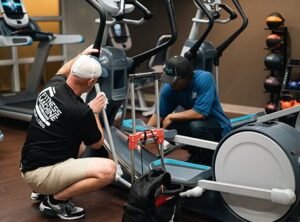
Some tasks require an expert touch. If your treadmill motor sparks, your elliptical console flashes error codes, or your functional trainer carriage jams completely, call a certified fitness equipment technician. Paying a professional to recalibrate a complex machine ensures the repair gets done correctly and keeps your warranties intact.