Nothing kills a great workout faster than a broken machine. Whether you own a busy local fitness center or just want to squeeze in a morning run in your garage, equipment failure brings everything to a frustrating halt.
Keeping your machines running smoothly requires regular attention. Both commercial and residential setups demand proactive care to prevent accidents and protect your investment. However, treating a heavy-duty club treadmill exactly like a lightweight folding model will quickly lead to problems.
Understanding the difference between commercial gym equipment repair and residential upkeep helps you make smarter decisions about your fitness gear. Let’s break down exactly what separates these two repair categories and how to keep your machines in peak condition.
What is Gym Equipment Maintenance?
Fitness machine maintenance involves the routine inspection, cleaning, lubrication, and adjustment of exercise equipment. This proactive approach prevents unexpected breakdowns and keeps machines operating safely.
Regular gym equipment servicing matters because these machines endure massive amounts of kinetic stress. Bearings wear down, belts stretch, and electronic components vibrate loose. Without intervention, minor wear transforms into catastrophic failure.
Most facilities and home users encounter a familiar set of common issues. You might notice a treadmill belt slipping during a sprint, hear grinding noises from an elliptical, or experience sudden motor failure. Catching these problems early during routine maintenance saves thousands of dollars in replacement costs.
Commercial Gym Equipment Repair
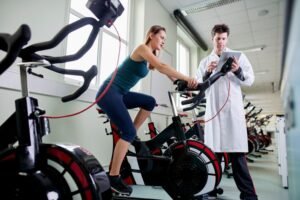
Commercial fitness centers operate under extreme conditions. Machines in these facilities run for up to eighteen hours a day, bearing the weight and stride of hundreds of different users. This heavy usage demands a completely different approach to equipment care.
Because of this constant stress, commercial gym equipment repair happens frequently. These are high-performance machines packed with complex AC motors, self-lubricating track systems, and advanced touchscreens. You cannot simply patch them up with basic hand tools.
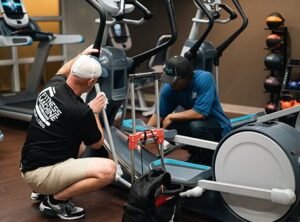
Fixing commercial gear requires certified professional technicians. These experts understand the intricate electronics and heavy-duty mechanics of club-quality brands. When a machine goes down, gyms lose money and frustrate members, making emergency repair services an absolute necessity.
To manage these risks, most successful facilities rely on preventive maintenance contracts. These agreements guarantee regular fitness machine maintenance, keeping equipment online and limiting liability.
Home Gym Repair Service
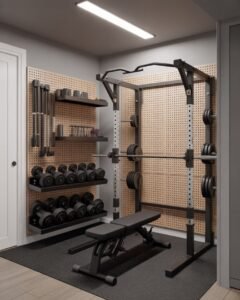
A residential workout space faces a completely different environment. Home equipment typically sees low to moderate usage, often running for just an hour or two a day. Because of this lighter workload, the machines themselves are usually built differently.
Home setups feature smaller equipment, such as folding treadmills, compact stationary bikes, and adjustable dumbbell mechanisms. While they require less frequent servicing than their commercial counterparts, ignoring their upkeep remains a massive mistake. Dust, pet hair, and lack of use can damage internal components just as easily as heavy wear.
When things break, owners often weigh DIY fixes against a professional home gym repair service. While you can handle basic belt tensioning yourself, replacing a motherboard requires expert help. Fortunately, the cost of maintaining home equipment stays relatively low compared to commercial spaces, provided you address small issues before they escalate.
Key Differences: Commercial vs Home
Understanding the specific differences between these two repair categories helps you hire the right help. Here is a clear comparison of what separates them:
- Usage level: Commercial machines run almost continuously under heavy stress. Home equipment runs intermittently for just a few hours a week.
- Equipment type: Commercial gear features heavy-gauge steel, AC motors, and advanced commercial-grade electronics. Home gear uses lighter materials and simpler DC motors to save space and cost.
- Repair frequency: Facilities need weekly or monthly check-ups. Home users generally need servicing just once or twice a year.
- Cost of maintenance: Commercial upkeep requires significant annual budgets. Home maintenance costs remain minimal unless a major part fails.
- Service complexity: Club machines require specialized diagnostic software and heavy lifting equipment. Home repairs usually involve basic mechanical troubleshooting.
- Technician requirements: Commercial repairs demand manufacturer-certified technicians carrying specific liability insurance.
Common Problems in Both Systems
Despite their differences, both environments share several mechanical vulnerabilities. Recognizing these universal problems helps you act quickly.
A treadmill belt slipping ranks as the most common issue across all environments. This happens when the walking belt stretches out over time or loses its proper tension. You will feel a sudden hesitation or jerk in the track with every footstep.
Motor overheating also plagues both commercial and home units. When dust builds up or lubrication dries out, the motor works twice as hard to move the belt. This excess friction generates severe heat, eventually melting internal wiring or blowing control boards.
You should also watch out for grinding or squeaking noise issues, which point to failing bearings or loose bolts. Calibration problems often cause machines to display incorrect speeds or inclines. Finally, electrical faults can trigger random shutdowns or unresponsive control panels, requiring immediate fitness equipment repair.
Why Professional Repair Matters
Attempting to fix complex fitness machinery without the right knowledge introduces severe safety risks. A poorly tensioned belt or improperly grounded wire can cause devastating injuries during a high-speed sprint.
Hiring a professional maximizes your equipment lifespan. Certified technicians spot invisible wear patterns and correct them before they destroy adjacent parts. This extends the functional life of your machines by years, improving overall performance efficiency.
While paying for expert help feels expensive upfront, it delivers massive cost savings over time. You avoid the cycle of replacing ruined machines every three years. Furthermore, the importance of certified technicians cannot be overstated. They carry the right parts, hold the necessary insurance, and provide warranties on their repair work.
Maintenance Tips for Gym Owners & Home Users
You do not need to be a mechanic to perform basic preventive care. Establishing a simple routine keeps the repair technician away.
Start with daily cleaning. Wipe down consoles, handrails, and frames with an approved, non-corrosive fitness equipment cleaner. This stops sweat from rusting the metal and keeps dust out of the electronics.
Next, establish a strict lubrication schedule. Check your user manual for the specific silicone or wax lubricant required for your treadmill deck or weight machine guide rods. Never use standard hardware store oil, as this attracts dirt and destroys belts.
Keep an inspection checklist handy. Once a month, walk around your equipment and test every function. Tighten loose bolts, check cables for fraying, and listen for unusual noises. Finally, build long-term preventive maintenance plans that include booking a professional technician for an annual deep dive.
Frequently Asked Questions
How often should gym equipment be serviced?
Commercial facilities should have their equipment serviced monthly or quarterly depending on usage volume. Home gym equipment generally requires a professional inspection and tune-up once a year to stay in optimal condition.
Is commercial repair more expensive than home repair?
Yes, commercial repair costs significantly more. The parts are larger and more complex, and the technicians require specialized certifications. However, the cost is offset by the equipment’s ability to generate revenue.
Can I repair gym equipment myself?
You can handle basic tasks like cleaning, applying deck lubrication, and tightening loose bolts. However, you should leave motor replacements, electrical diagnostics, and complex treadmill repair to trained professionals to avoid injury and voiding your warranty.
Conclusion
The divide between commercial and home gym equipment repair comes down to scale, complexity, and usage. Commercial spaces demand robust maintenance contracts and specialized technicians to handle constant heavy use. Meanwhile, home gyms benefit from targeted, annual tune-ups to combat the effects of dust and intermittent operation.
Regardless of where you work out, regular fitness machine maintenance remains the best way to protect your investment. Skipping basic upkeep turns minor friction into total motor failure, costing you time, money, and safety.
Take your equipment’s health seriously. Clean your machines daily, listen for strange noises, and never hesitate to call a professional for complex diagnostics. By prioritizing expert gym equipment servicing, you ensure a safe, efficient, and reliable workout experience for years to come.