
A well-maintained treadmill runs quietly, moves smoothly, and lasts longer. One of the simplest tasks that supports that smooth performance is belt lubrication. But it needs to be done correctly, with the right product, and according to your treadmill’s instructions.
How Do You Lube a Treadmill Belt?
To lube a treadmill belt, first check the owner’s manual to confirm whether your model needs lubrication and which product to use. Turn off and unplug the machine, then apply the manufacturer-recommended lubricant, usually silicone-based, to the deck surface beneath the running belt. Apply only the amount specified, reposition the belt, then run the treadmill at low speed to distribute the lubricant evenly and check the belt tracking.
That’s the short answer. Below, we’ll walk through the full process, common mistakes, and when it makes sense to call a professional instead.
Why Does a Treadmill Belt Need Lubrication?
Every time you walk or run on a treadmill, the running belt glides over the deck underneath it. That contact creates friction. A small amount of friction is normal, but too much makes the belt drag, forces the motor to work harder, and speeds up wear on both the belt and deck.
Proper treadmill belt lubrication reduces that friction. It helps the belt move freely, keeps the motor from straining, and supports the quiet, consistent performance you expect from a healthy machine.
When lubrication is neglected, problems tend to build slowly. You might notice a sluggish belt, more heat, or unusual sounds. Over time, excess friction can contribute to premature belt wear, deck damage, or motor issues. Keeping up with maintenance is far cheaper than replacing major parts.
It’s worth noting that not every treadmill is the same. Some models use pre-lubricated or maintenance-free decks. That’s exactly why the manual comes first.
How to Lube a Treadmill Belt
Here is a practical, beginner-friendly process. Always defer to your specific treadmill’s instructions if they differ from these general steps.
- Check the owner’s manual first. Confirm your treadmill actually requires lubrication, then note the recommended lubricant type and the exact application procedure. Some models should never be manually lubricated.
- Turn off and unplug the treadmill. Power it down completely. Disconnect the power cord when your manufacturer’s procedure calls for it. This protects you from moving parts and electrical hazards.
- Confirm the correct lubricant. Use only the product approved for your model. Silicone treadmill lubricant is commonly specified, but verify before you apply anything.
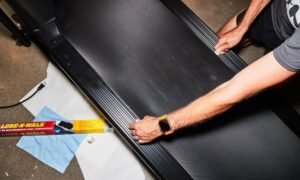
- Access the area beneath the running belt. Follow the manual’s method for gently loosening or lifting the belt. Never force it. Keep hands and clothing clear of any components.
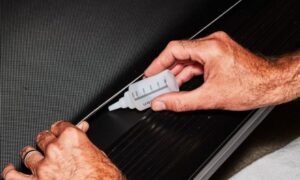
- Apply the recommended amount to the deck. Apply lubricant to the deck surface under the belt, following the pattern and quantity in your manual. More is not better.
- Avoid unsuitable areas. Keep lubricant off the motor, rollers, electronics, and top of the belt unless your manual specifically instructs otherwise.
- Reposition the belt correctly. Make sure the belt sits properly and any adjustments you loosened are returned to their original position.
- Run the treadmill at low speed. Plug it back in, then run it slowly for the time your manual suggests. This helps spread the lubricant across the deck.
- Let the lubricant distribute. Give it a minute or two to work its way under the belt evenly.
- Check belt movement and tracking. Watch that the belt runs centered and moves smoothly without hesitation. If it drifts to one side or slips, it may need adjustment.
If you’re uncomfortable accessing the belt or your model has an unusual design, it’s perfectly reasonable to schedule professional service instead.
What Lubricant Should You Use on a Treadmill Belt?
The correct lubricant depends entirely on your treadmill’s manufacturer and model. Many manufacturers specify a silicone treadmill lubricant, available as a liquid or spray designed specifically for running belts. It’s built to reduce friction without harming the belt or deck material.
Still, don’t assume. Some brands sell their own branded formula or require a particular application method. Your manual is the deciding source.
Never use these on a treadmill belt:
- WD-40 – it’s a solvent and water displacer, not a treadmill lubricant, and can damage belt and deck surfaces.
- Cooking oils – they turn sticky and attract debris.
- Automotive or motor oils – wrong chemistry entirely, and they can degrade components.
- General-purpose sprays or household oils – these can cause more harm than good.
Using the wrong product is one of the fastest ways to create a problem where there wasn’t one.
How Often Should You Lubricate a Treadmill Belt?
There’s no single interval that fits every machine. The right schedule depends on several factors:
- Manufacturer recommendations in your manual
- Frequency of use and total running hours
- Number of users on the machine
- Commercial versus residential use (gyms need service far more often)
- Environment, such as dust, humidity, or temperature
- Equipment age and wear
- Previous maintenance history
A lightly used home treadmill has very different needs than one running all day in a fitness studio. The best approach is simple: follow your manufacturer’s maintenance schedule, and adjust based on how the machine actually behaves.
Signs Your Treadmill May Need Maintenance
Watch for these symptoms during normal use:
- Belt hesitation or sluggish movement
- Increased friction or noticeable heat
- Belt slipping under your stride
- Poor tracking, where the belt drifts off-center
- Unusual grinding, squealing, or thumping sounds
- Visible wear on the belt or deck
- The motor straining, laboring, or running hot
Here’s an important reminder: these signs don’t automatically mean lubrication is the fix. Slipping, noise, or poor tracking can point to belt tension, alignment, roller, or motor issues. If lubrication doesn’t resolve the symptom, it’s time for a closer inspection.
Common Treadmill Lubrication Mistakes
Even careful owners slip up. Avoid these:
- Using the wrong lubricant, especially WD-40 or household oils.
- Applying too much, which can make the belt slip and attract dirt.
- Skipping the manual and guessing at the procedure.
- Ignoring belt alignment after lubricating.
- Continuing to run a machine with burning smells, electrical issues, or loud mechanical noises.
- Overlooking belt and deck wear that lubrication can’t fix.
If you smell burning or hear a serious mechanical noise, stop using the treadmill immediately and have it inspected.
When Should You Call a Treadmill Repair Professional?
Lubrication is a routine task, but plenty of situations call for a trained technician. Reach out for help when a belt keeps slipping after lubrication, tracking won’t stay centered, the motor strains, you notice electrical problems, or you hear ongoing unusual noises.
The team at NJ Fitness Equipment Repair Specialist LLC handles these issues every day. Our professional treadmill repair services cover belt adjustment, belt replacement, motor repair, electrical troubleshooting, and full diagnostics for both home and commercial machines.
A technician can also spot problems you might miss. During a tune-up, we inspect belts, decks, motors, electronics, and alignment together, so small issues get caught before they become expensive repairs. If your equipment needs more than lubrication, our broader fitness equipment repair and servicing options include installation, relocation, preventive maintenance, and diagnostics.
Treadmill Maintenance for New Jersey Homes and Businesses
Regular maintenance pays off whether you own a single home treadmill or run a floor full of machines at a gym. Consistent care keeps equipment safe, quiet, and reliable, and it protects your investment over time.
We provide preventive maintenance and treadmill servicing for residential and commercial customers across New Jersey, along with nearby areas of New York including Rockland County, Westchester County, The Bronx, and parts of Orange County. From a quick belt adjustment to a full commercial tune-up, our fitness equipment repair services throughout New Jersey are built to keep your equipment running the way it should.
Frequently Asked Questions
How do I lube a treadmill belt?
Check your manual, turn off and unplug the machine, apply the manufacturer-approved lubricant to the deck beneath the belt in the recommended amount, reposition the belt, then run it at low speed to spread the lubricant and check tracking.
What lubricant is best for a treadmill belt?
Most manufacturers specify a silicone-based treadmill lubricant, but the correct product depends on your model. Always confirm with your owner’s manual before applying anything.
Can I use WD-40 on my treadmill belt?
No. WD-40 is a solvent and water displacer, not a belt lubricant, and it can damage the belt and deck. Use only a product approved for your treadmill.
How often should I lubricate my treadmill?
There’s no universal interval. It depends on your manufacturer’s guidance, how often the machine is used, the number of users, the environment, and the equipment’s age. Follow your manual’s schedule.
How do I know if my treadmill needs lubrication?
Signs include a sluggish or slipping belt, increased friction, added heat, or unusual noise. These symptoms can also point to other issues, so check the manual and inspect further if lubrication doesn’t help.
Can over-lubricating damage a treadmill?
Yes. Too much lubricant can cause the belt to slip, attract dust and debris, and create a mess on components. Apply only the amount your manual specifies.
When should I hire a treadmill repair technician?
Call a professional when belt slipping, poor tracking, motor strain, electrical faults, or unusual noises persist after basic maintenance, or if you notice burning smells or serious mechanical problems.
Conclusion
Lubricating a treadmill belt is straightforward when you follow the right order: check the manual, use the approved lubricant, apply the correct amount, test at low speed, and inspect the belt and tracking afterward. When symptoms point beyond simple lubrication, professional service is the smart next step.
If your treadmill needs inspection, belt replacement, a tune-up, or preventive maintenance, NJ Fitness Equipment Repair Specialist LLC is ready to help homes and businesses across New Jersey and nearby New York areas. Reach out to keep your equipment running safely and smoothly.